Mountains and Beacons

It’s been a week of walking, breathing, eating, drinking, sleeping. I ran out of reading material on day 2 of my backpacking trip. Lying in my hammock, I watched the stars until sleep overtook me each night. The walk-breathe-eat-drink-sleep cycle was punctuated by stunning views, an occasional rain cloud letting loose and dropping the temperature, and negotiations on how to tackle a hot stretch carrying 3 liters of water. Such is backpacking in summer in Northern New Mexico. We crossed 2 running creeks in that entire week. One was a slow meander feeding an alpine meadow as we hiked to the highest point in the San Pedros, which made me think of Lyell Creek near Tuolumne Meadows in the Sierras. The other was the remnant of a flash flood in a narrow creek bed running through a fire-ravaged hillside in the Santa Fe National Forest. The creek bed was strewn with broken trees, limbs, and rocks; the sandy earth easily moved downhill. One spot where the creek became a small cascade allowed for a frigid shower, removing dust accumulated over five trail days. It was a hot afternoon, and I repeated the shower several times, which helped bring down my core temperature. This stood out during a week of moving my pack-laden body up and down the trail.
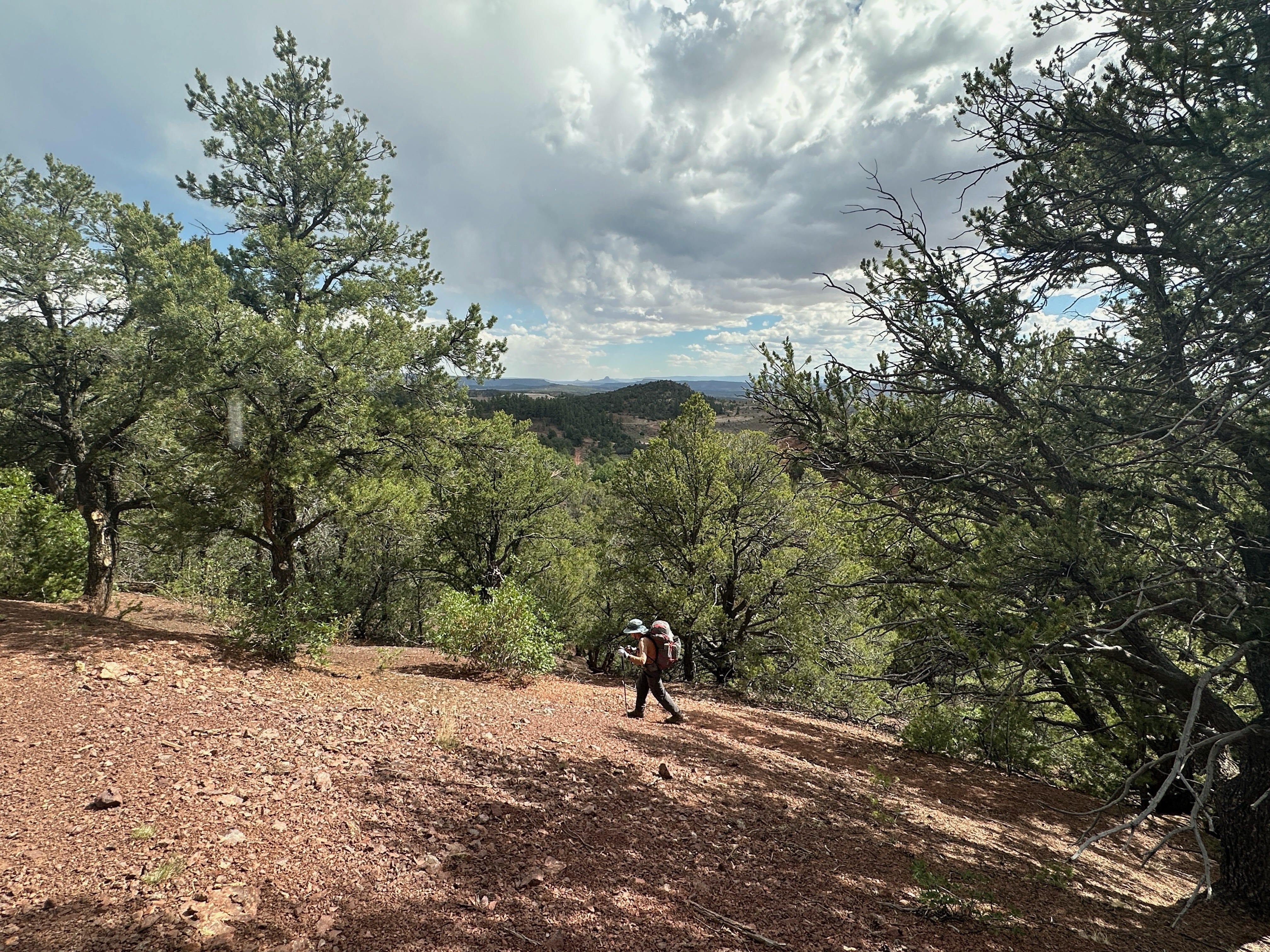
In the hiker world, we call this type-2 fun. Gathering experiences that don’t come easy, full of highs and lows. That parched mouth feeling when the day ends, and lukewarm water cannot satisfy your thirst, is a low point. Feeling your legs move effortlessly up an incline as the sun rises is a high. Each day brings experiences I don’t get in my daily life. Each day a new gratitude floods my brain: I can still do this; my body works well despite my age.
The joy of having a body that serves me, a body that lets me enter remote wilderness, survive and come back renewed, is a rare gift.
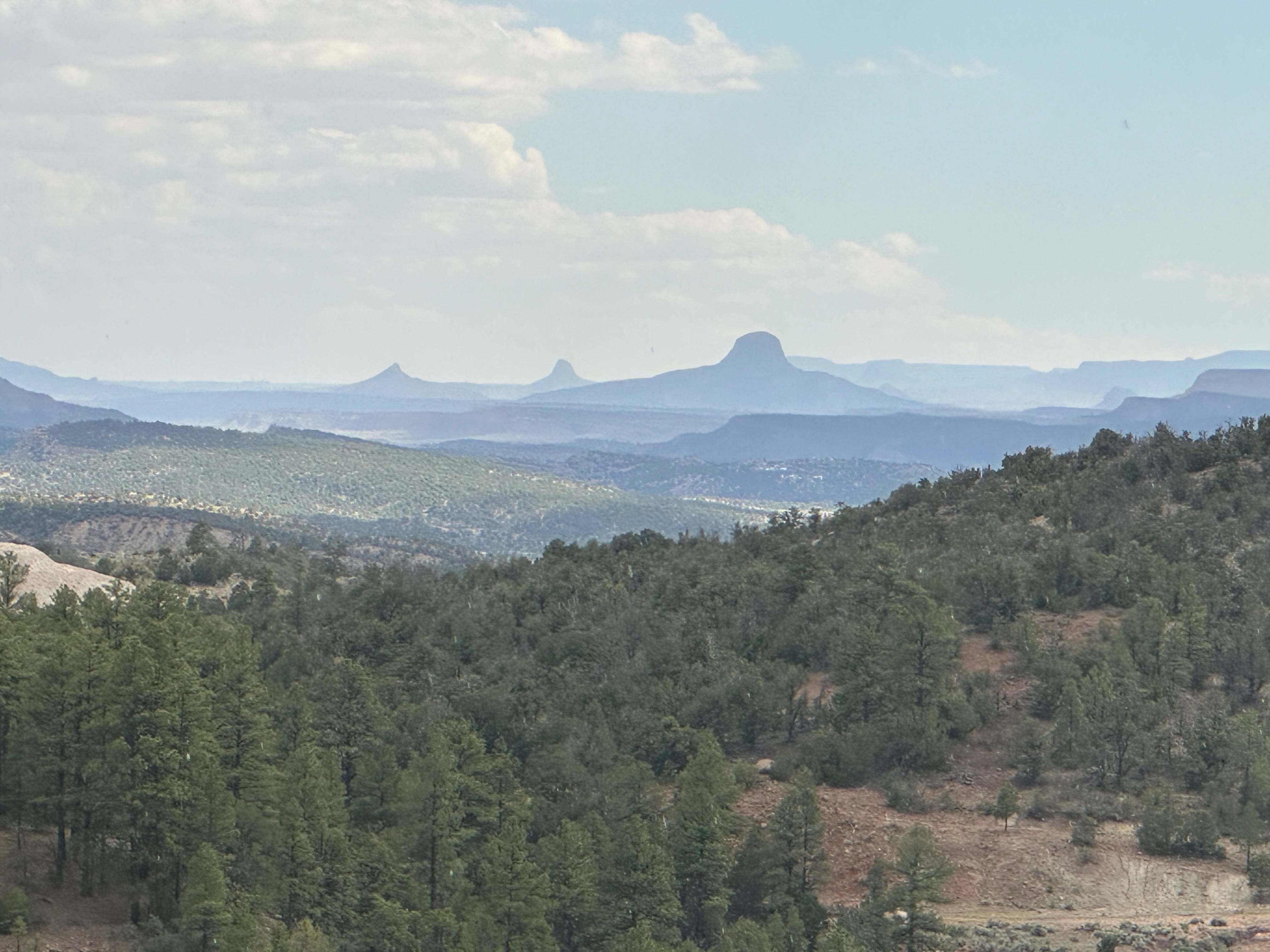
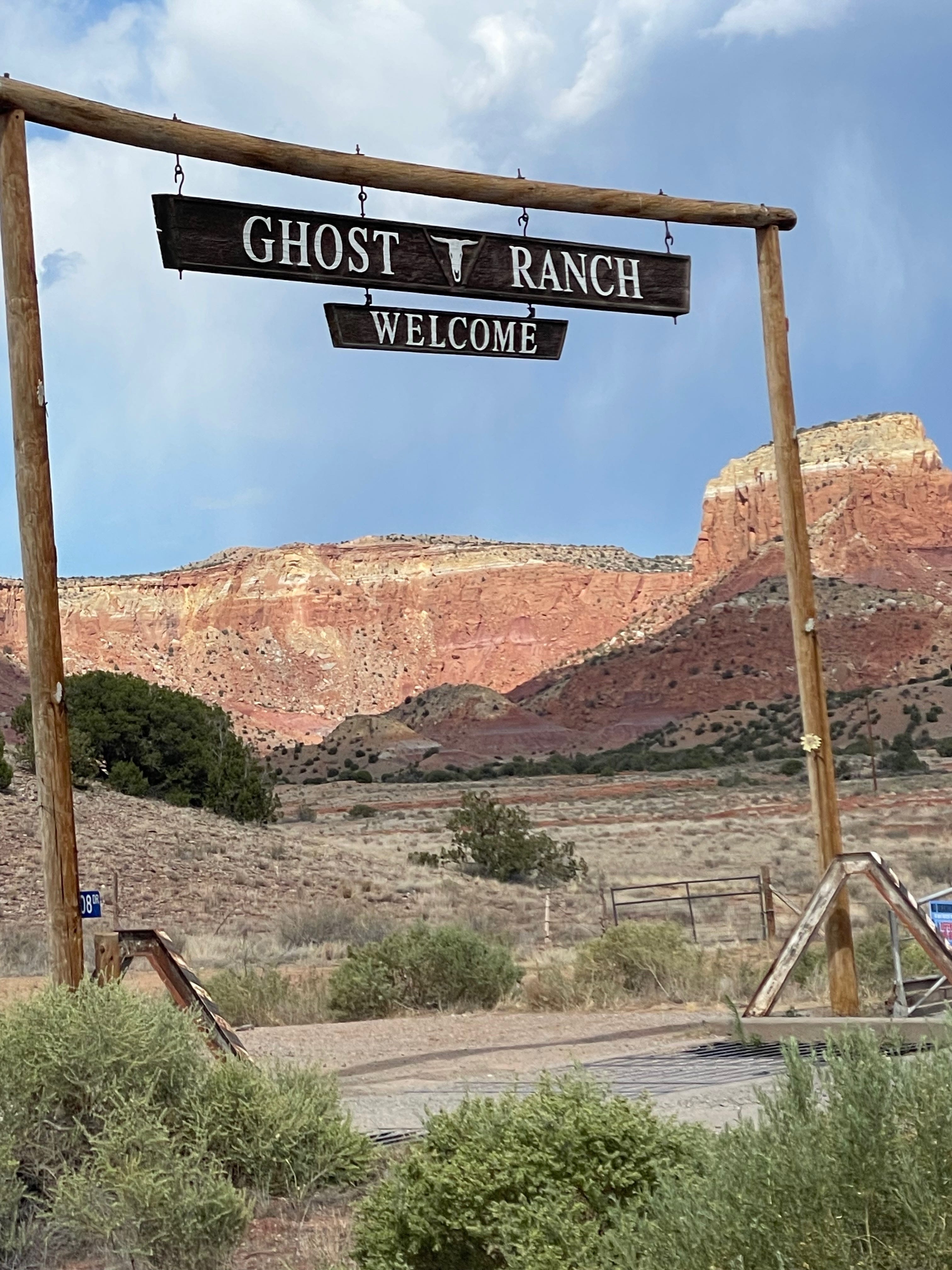
The joy of having a body that serves me, a body that lets me enter remote wilderness, survive and come back renewed, is a rare gift. I no longer want to live on the trail for weeks on end; I no longer want to prove I can walk long distances and put a notch in my hiking hat; I no longer need to escape my daily world. I just want to have enough time to talk to the trees, to have Pedernal be the center of my world as I circle around it in the landscape and see it from all sides. O’Keefe painted Cerro Pedernal (flint hill) - a narrow, flat mesa at 9866 feet elevation - from different angles, using it as a backdrop for her life at Ghost Ranch. Pedernal was her beacon. For a week, this mountain was my beacon. I could measure my progress on the trail by the different views of this landmark. Pedernal is still visible on the horizon from Taos.
In Southern Oregon, where I lived for 35 years, Mount Shasta was such a beacon. I climbed it once (14,179 ft). Conquering this landmark, claiming it, knowing the world from its perspective, was my aim. I don’t have the urge to conquer any longer, so Pedernal remains a beacon, a point of orientation. Beacons are reminders that while we move, some things/points stay steady. I take great comfort in the steadiness of mountains. My daily mountain, Mount Taos or Pueblo Peak (12,305) in the Sangro de Cristo range, shows itself whenever I look north out of my window. Mountains symbolize stillness and steadiness, sought by Buddhist meditators seeking refuge from worldly distractions. High mountains are thought by many to be near the divine. My experience is that at high elevations my mind becomes still, empty of thought (and oxygen) and so more susceptible to spiritual insights. On my journeys, I have sought high mountains, not because I believe the divine lives there, but because I am more prone to experiencing inner quiet, which leads to valuable insights.
High mountains are thought by many to be near the divine
This last week of backpacking didn’t offer mind-altering spiritual insights. I embraced the present moment, embracing circumstances, both positive and negative. The essence of spirituality lies in embracing this moment. Observing the challenges the trail threw at me, I came back with a deep sense of acceptance that change is the daily fare. The cool of the early morning comes and goes; the heat of the middle day rises and wanes in the afternoon; the evening offers rest, sunsets and reflections. My aging body struggles with a heavy pack. Living outside 24 hours a day doesn’t let you get away from this reality, except for finding an occasional shady spot when needed. Movement prompts change; movement is the life force that drives living in this world.
Movement is the life force that drives living in this world.
125 Million years ago tectonic forces pushed up the Alta Mesa we hiked. I climbed the mesa; I walked the mesa; I saw the striations of earth in red, yellow, pink, and beige at every turn. When the world is in turmoil with chaos, heat, war, and 4th of July fireworks, these ancient formations provide me with perspective and tranquility. It’s just me, my legs moving, mesa birds singing; just another day in a long string of days.
I lived; I experienced; I struggled; I accepted; I rejoiced. My backpack trip has restored my belief that my body can continue to support me. Appreciation for the magic of modern medicine runs deep. The trail provided.
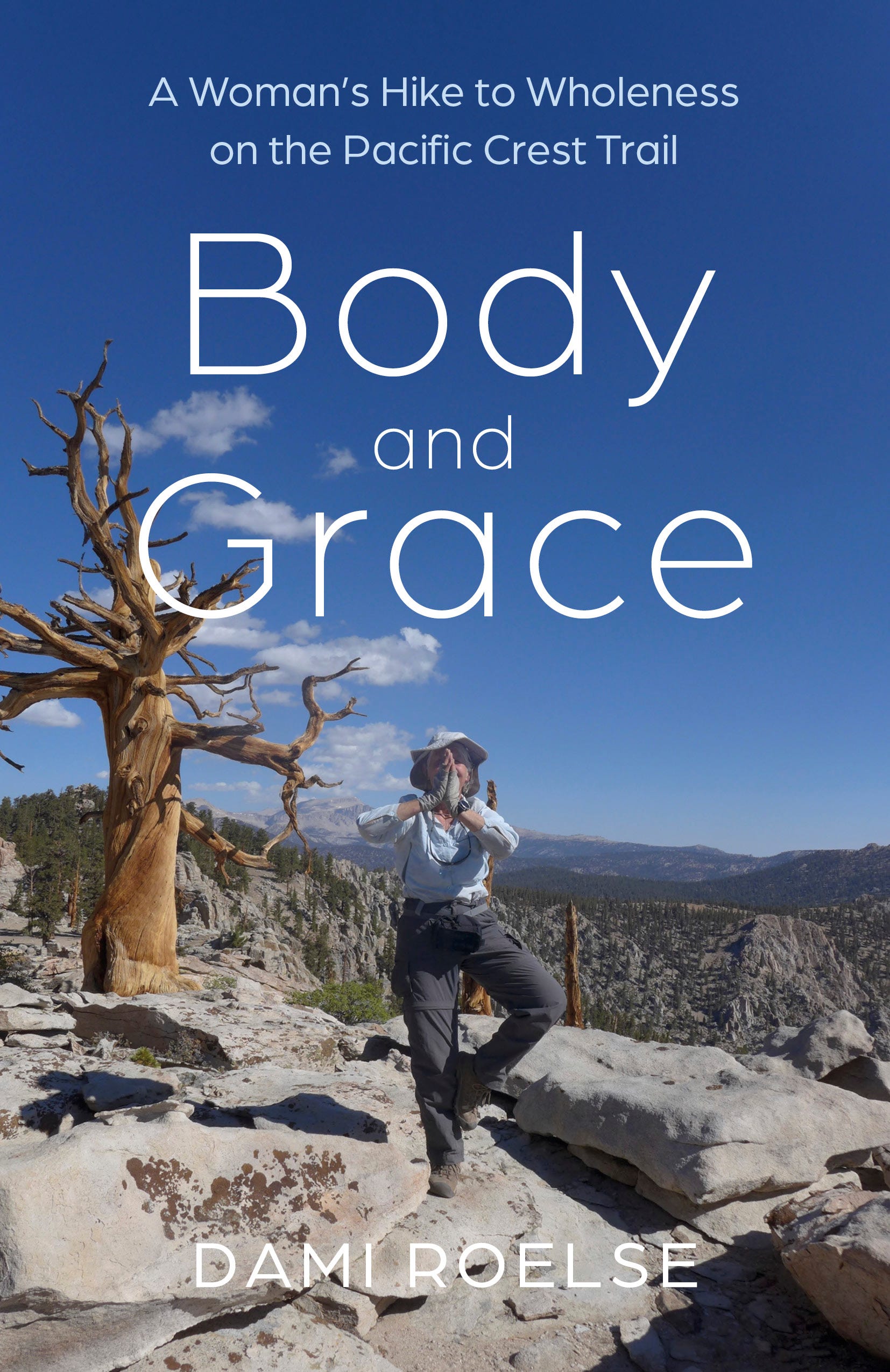
Interested in life on the long trail? Read my book “Body and Grace, a woman’s hike to wholeness on the Pacific Crest Trail”